
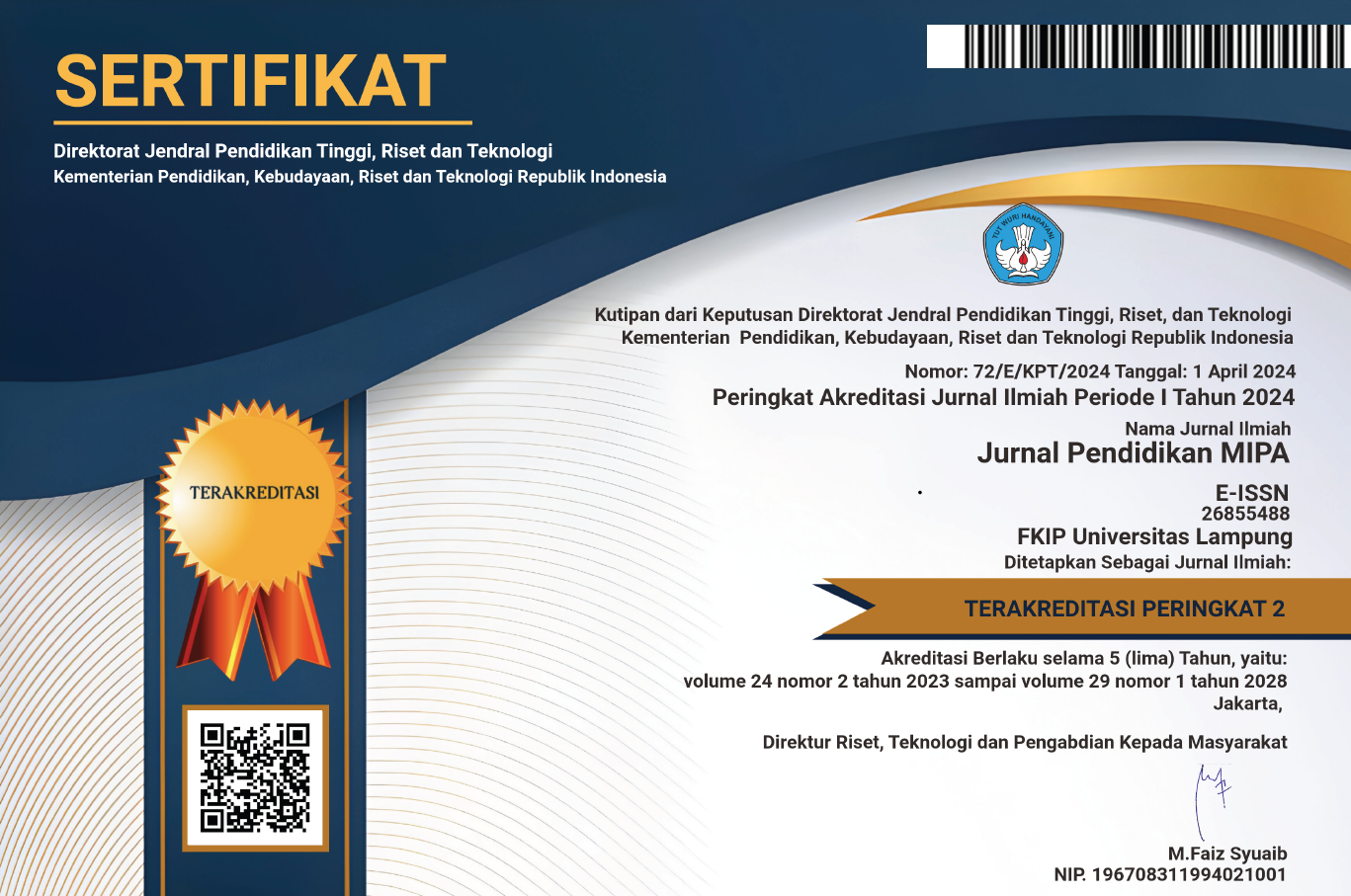

Chatbot Artificial Intelligence (AI) to Supporting Differentiated Mathematics Learning


Artificial Intelligence chatbots have become famous nowadays because of their ease of use, which is even felt by educators and students. However, the AI chatbot algorithm sometimes does not match what is expected because it is not precise and does not match the prompt. For example, when we type the prompt "basic concepts of mathematical modeling for middle school class VII" there is very little explanation of the basic concepts. The search results provided by AI chatbots are too complex for students who want to learn simple basics. Based on this, this research was carried out with the aim of developing an AI chatbot to support differentiation learning. This type of research is ADDIE model development research which is carried out in five stages, namely analysis, design, development, implementation and evaluation. The results of the research at the analysis stage are that students need learning media that is appropriate to their level of understanding of mathematical modeling material as basic material before studying other material. The results of this analysis are the basis for designing an AI chatbot and bot scenarios to be developed and given to experts, namely educational technologists and mathematics education lecturers. After that, small class trials and large class trials at the implementation stage to get practicality and effectiveness test results in using the AI chatbot. The final stage is evaluation as a process of reflection on the results of AI chatbot development. The research results show that the AI chatbot media developed is valid, practical and effective. Valid criteria with a percentage of 89.7%, practical criteria of 85% and effective criteria of 77.67% in small group trials.
Keywords: chatbot AI, differentiated, mathematics learning.
Al Hakim, R. R., & Setyowisnu, G. E. (2021). Rancang bangun media pembelajaran matematika berbasis android pada materi kalkulus diferensial. Prosiding Seminar Pendidikan Matematika Dan Matematika, 3(2721). https://doi.org/10.21831/ pspmm.v3i0.133
Anum, P. (2022). Pengembangan media chatbot scaffolding dengan model project based learning dalam e-lematika untuk meningkatkan hasil belajar siswa pada materi koordinat kartesius kelas viii sekolah menengah pertama. Universitas Pendidikan Indonesia.
Boussouf, Z., Amrani, H., Zerhouni Khal, M., & Daidai, F. (2024). Artificial intelligence in education: a systematic literature review. Data and Metadata, 3(3). https://doi.org/10.56294/dm2024288
Chen, Q., Gong, Y., Lu, Y., & Tang, J. (2022). Classifying and measuring the service quality of AI chatbot in frontline service. Journal of Business Research (Vol. 145). https://doi.org/10.1016/j.jbusres.2022.02.088
Cheng, L., Croteau, E., Baral, S., Heffernan, C., & Heffernan, N. (2024). Facilitating student learning with a chatbot in an online math learning platforming platform. Journal of Educational Computing, 62(4), 907–937. Retrieved from https://doi.org/10.1177/07356331241226592
Dwivedi, Y. K., Kshetri, N., Hughes, L., Slade, E. L., Jeyaraj, A., Kar, A. K., … Wright, R. (2023). “So what if ChatGPT wrote it?” Multidisciplinary perspectives on opportunities, challenges and implications of generative conversational AI for research, practice and policy. International Journal of Information Management, 71(March). https://doi.org/10.1016/j.ijinfomgt.2023.102642
Go, B., Lim, C., & Shin, B. (2024). Development of a math-AI convergence instructional model using a generative AI chatbot. Journal of Educational Technology, 39(3), 1–40. https://doi.org/10.17232/kset.40.1.1
Gökçearslan, Ş., Tosun, C., & Erdemir, Z. G. (2024). Benefits , challenges , and methods of artificial intelligence ( ai ) chatbots in education : a systematic literature Review To cite this article : Gokcearslan , S ., Tosun , C ., & Erdemir , Z . G . ( 2024 ). Benefits , challenges , and methods of Benefi. International Journal of Technology in Education, 7(1), 19–39. https://doi.org/10.46328/ijte.600
Herwina, W. (2021). Optimalisasi kebutuhan murid dan hasil belajar dengan pembelajaran berdiferensiasi. Perspektif Ilmu Pendidikan, 35(2), 175–182. https://doi.org/10.21009/pip.352.10
Jaafar, N. A., Nor, S. R., & et all. (2022). Increase students’ understanding of mathematics learning using the technology-based learning. International Journal of Advanced Research in Future Ready Learning and Education, 28(1), 24–29. https://doi.org/10.37934/frle.28.1.2429
Jayantika, I. G. A. T., & Namur, G. (2022). Peran teknologi pembelajaran dalam meningkatkan literasi digital matematika. Indonesian Journal of Educational Development, 3(2), 285. https://doi.org/10.5281/zenodo.7033331
Johari, N. M., & Nohuddin, P. N. (2021). Developing a Good Quality Chatbot. Journal of Information System and Technology Management, 6(22), 88–102. https://doi.org/10.35631/jistm.622008
Laja, Y. P. W., & Ahzan, Z. N. (2024). Pengembangan lembar kerja mahasiswa model advanced organizer pada mata kuliah aljabar linear elementer. AKSIOMA:Jurnal Program Studi Pendidikan Matematika, 13(3), 1012–1023.
Laksana, F. S. W., & Fiangga, S. (2022). The development of web-based chatbot as a mathematics learning media on system of linear equations in three variables. MATHEdunesa, 11(1), 145–154. https://doi.org/10.26740/mathedunesa. v11n1.p145-154
Lee, D., & Yeo, S. (2022). Developing an AI-based chatbot for practicing responsive teaching in mathematics. Computers & Education, 1(19).
Opesemowo, O. A. G., & Adewuyi, H. O. (2024). A systematic review of artificial intelligence in mathematics education: The emergence of 4IR. Eurasia Journal of Mathematics, Science and Technology Education, 20(7). https://doi.org/10.29333/ejmste/14762
Oueslati, K., & Ayari, S. (2024). A Bibliometric analysis on artificial intelligence in marketing: implications for scholars and managers. Journal of Internet Commerce, 23(3), 233–261. https://doi.org/10.1080/15332861.2024.2350326
Palancı, A., & Turan, Z. (2021). How does the use of the augmented reality technology in mathematics education affect learning processes?: a systematic review. Uluslararası Eğitim Programları ve Öğretim Çalışmaları Dergisi, 11(1), 89–110. https://doi.org/10.31704/ijocis.2021.005
R. Martínez-Téllez, & Camacho-Zuñiga, C. (2023). Enhancing mathematics education through AI Chatbots in a Flipped Learning Environment. In 2023 World Engineering Education Forum - Global Engineering Deans Council (WEEF-GEDC), (pp. 1–8).
Saputra, H., Utami, L. F., & Purwanti, R. D. (2023). Era baru pembelajaran matematika: menyongsong society 5.0. Indiktika : Jurnal Inovasi Pendidikan Matematika, 5(2), 146–157. https://doi.org/10.31851/indiktika.v5i2.11155
Sihaloho, F. A., & Napitupulu, Z. (2024). Penggunaan kecerdasan buatan (artificial intelligence) dalam dunia pendidikan di Indonesia: Tinjauan Literatur. Rekognisi: Jurnal Pendidikan Dan Kependidikan, 9(1), 13–20.
Smutny, P., & Schreiberova, P. (2020). Chatbots for learning: A review of educational chatbots for the Facebook Messenger. Computers and Education, 151(June 2019), 103862. https://doi.org/10.1016/j.compedu.2020.103862
Tomlinson, C. A. (2014). The differentiated classroom: Responding to the needs of all learners. ASCD.
Van Doc, N., Hoai Nam, N. T., Thanh, N. T., & Minh Giam, N. (2023). Teaching mathematics with the assistance of an ai chatbot to enhance mathematical thinking skills for high school students. International Journal of Current Science Research and Review, 06(12), 8574–8580. https://doi.org/10.47191/ijcsrr/v6-i12-102
Wijaya, M. H., Sarosa, M., & Tolle, H. (2018). Rancang bangun chatbot pembelajaran java pada google classroom dan facebook messenger. Jurnal Teknologi Informasi Dan Ilmu Komputer, 5(3), 287. https://doi.org/10.25126/jtiik.201853837
Yanuarto, W. N. (2018). The flipped classroom learning model untuk menumbuhkan kemandirian belajar matematika dan memaksimalkan peran teknologi pada pendidikan. De Fermat : Jurnal Pendidikan Matematika, 1(1), 13–19. https://doi.org/10.36277/defermat.v1i1.10
Yeo, S., Moon, J., & Kim, D. J. (2024). Transforming mathematics education with AI: Innovations, implementations, and insights. The Mathematical Education, 63(2), 387–392. Retrieved from https://www.researchgate.net/profile/Sheunghyun-Yeo/publication/381773100_Editorial_Transforming_mathematics_education_with_AI_Innovations_implementations_and_insights/links/667e6069714e0b03152fe7f1/Editorial-Transforming-mathematics-education-with-AI-Inn
No supplementary information available.
Refbacks
- There are currently no refbacks.

This work is licensed under a Creative Commons Attribution-ShareAlike 4.0 International License.